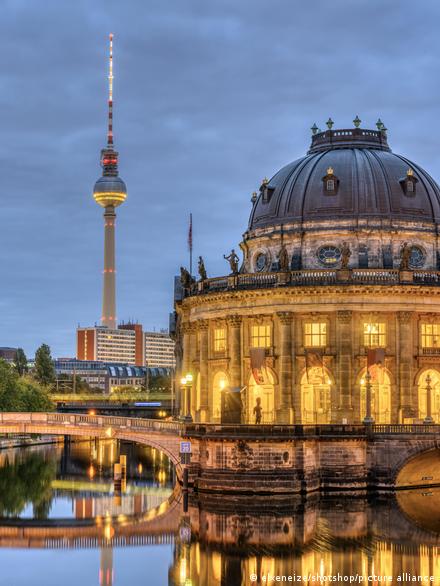
This year’s Berlin Blockchain Week brought together more than 68 events from 13-21 June, with attendees from over 55 countries meeting, building, and exchanging ideas. Sigma Prime was present in Berlin talking to builders, researchers, and protocol teams. Here’s our recap.
Two core themes emerged: an institutional pivot is clearly underway, and a long overdue machine-to-machine infrastructure layer for agentic AI is entering increasingly into focus.
Thinking Through Agentic Infrastructure and Security
At the Solana Summit, put on by Superteam Germany, AI agents and payments are quickly moving from concept to reality, whether the rest of the industry is ready or not. Jupiter was on hand to discuss its new focus on institutional products, led by its new president. The Fireblocks team also explained the importance of operational security, custody, and key management in the context of TradFi adoption, a reminder that most teams still bolt this on at the end instead of building it in from day one, which is exactly backwards.
Prof. Dr. Alexandra K. Mikityuk, from STAEX, gave a keynote on the core questions for agents on-chain: who proves who they are, and who secures the channel they use? She explained that trust, identity, and secure communication all need to be strengthened for the agentic era. Many do not realize that LLMs effectively run blind and consume data they cannot verify, which is a genuinely alarming state of affairs for an industry that is about to hand these things wallets and let them transact autonomously. The transport layer they use is open, with ambient LAN trust, which is about as reassuring as it sounds.
Her suggestion was that crypto should bind identity through signatures, data through hash chains, and intent through encrypted tunnels, rather than open ports and public DNS. She is right and the industry dragging its feet on this is asking for trouble.
Positioning Security and Diversity
At a meetup hosted by SheFi, there were some important discussions around making crypto more welcoming and accessible to women. A group of product marketers also put forward the idea that security service providers should be a lot more creative in how they position and market themselves. This is fair, since most of the industry still markets audits like a checkbox exercise rather than the thing standing between a protocol and a big exploit.
Meanwhile, M0, a stablecoin infrastructure company, noted that security costs are becoming an increasingly important consideration for infrastructure players in the space, since it is a non-negotiable in the development lifecycle.
The Ethereum Foundation Catches Up
We were also able to catch up with some folks from the Ethereum Foundation where there is definitely a bit of soul searching going on. The EF team shared that they are focused on the ecosystem making changes to secure Ethereum's future. As the ecosystem's steward, efforts are focused on improving base layer scalability, pushing for wider use of formal verification, improving the data availability layer, and tightening up UX wherever possible.
How and when all of this will be achieved remains unclear. Smaller changes also include block building and ePBS proposer-builder separation, as the current environment for builders and relays remains opaque and cartel-like, especially with the failure of the BuilderNet project to really take off. Meanwhile, Sigma Prime is proud to be progressing and actively breaking into this market with our Bombora builder project.
DAPPCON: The Other Side of the Coin
DAPPCON was more lightly attended than in previous years, which tells you about the mood of the ecosystem currently. That said, the encounters and conversations were more intimate and went deeper, proof that smaller is not necessarily worse.
Major players continue to build within the system, and the Gnosis team shared more on their Gnosis VPN project. We also had great chats with Argot Collective, a recent spin-off from EF, that maintains the Solidity language and tooling, as well as with block explorer analytics firm Routescan. There was also some prevailing sentiment that L2s are dying off as the major players in the space consolidate their position.
Looking Ahead
Throughout the week, we sensed strong interest and engagement in our security expertise. Although the crowds may have been thinner at this year's Berlin Blockchain Week, the builders who actually showed up were the ones seriously pushing agentic crypto and institutional infrastructure forward. A smaller room of people who mean it beats a packed one that does not.
If these are challenges your team is thinking about too, we’d be happy to chat. www.sigmaprime.io.